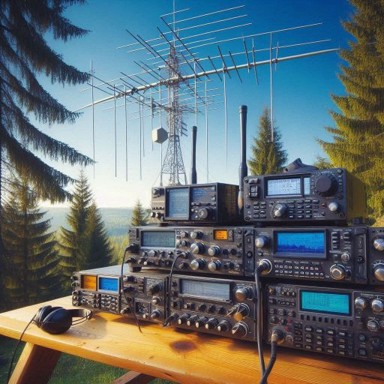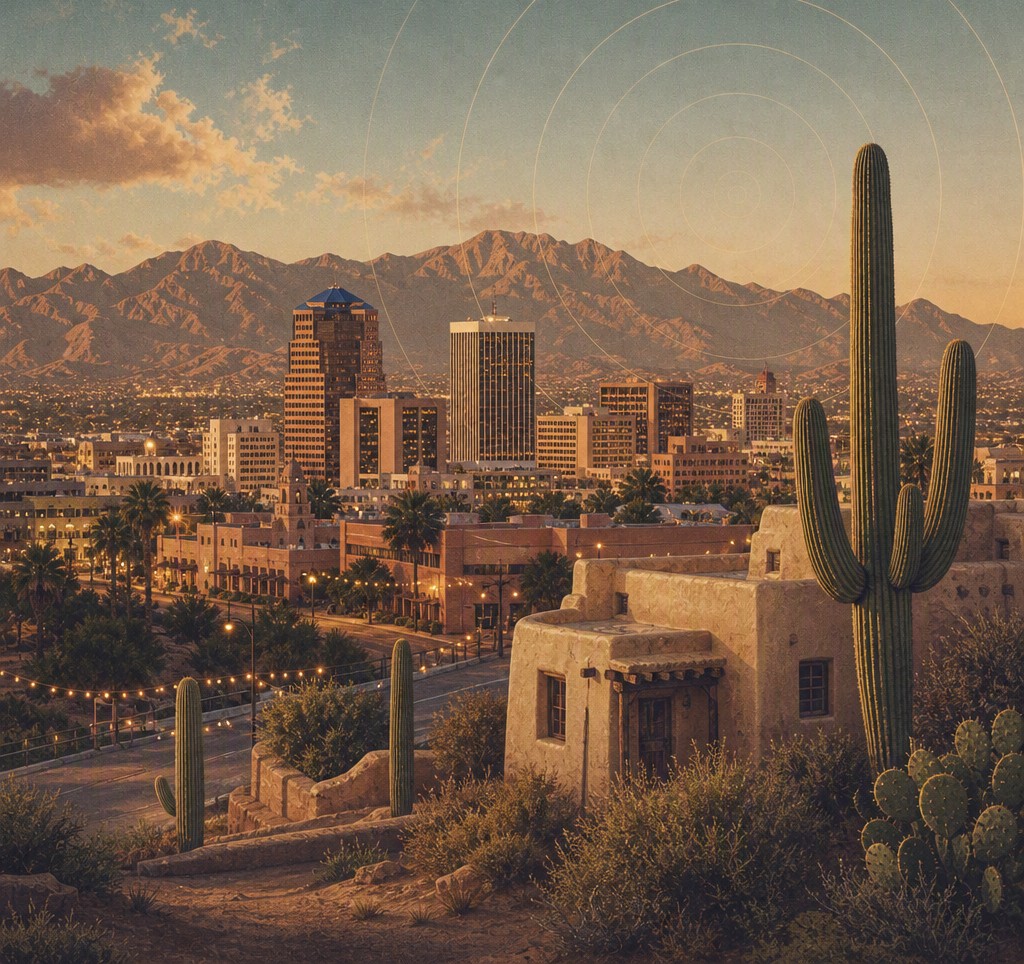
Happy National Radio Day!
A Salute to Tucson’s Desert Frequencies
In the Old Pueblo, radio has never been just a medium; it has always been a landscape, a signal‑stitched map of voices drifting across the spirit of saguaros, threading through mesquite shadows, bouncing off prickly towers and monsoon skies. It moves through the desert like a quiet companion, settling into the ribs of the city, humming in kitchens, cars, and adobe corners where someone always kept a radio warm. On National Radio Day, we honor the stations that shaped Tucson’s sound—the ones whose signals became part of our collective memory, the ones that taught us how a city can speak, how a frequency can become a home, how a broadcast can feel like a ritual. These voices rose with dust devils, fell with monsoon curtains, and stitched themselves into the daily rhythm of the Old Pueblo, carrying laughter, storms, guitars, and the soft thrum of human presence. Even now, at dusk, you can almost hear it: the faint ghost‑signal of Tucson’s past drifting through the saguaros, still searching for a speaker to land in, still carrying the stories of a city that once tuned in together.
Tucson’s Desert‑Born Radio Treasures
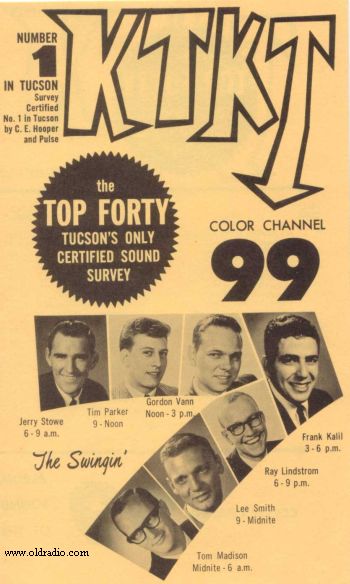
KTKT 990 AM: The Desert Powerhouse (1950s–early 1970s)
KTKT 990 AM, the legendary Top‑40 giant that ruled Tucson’s airwaves through the 1950s and 1960s, carrying its momentum into the early 1970s.
During the Frank Kalil era, KTKT was pure velocity: tight boards, sharp voices, and a pulse that matched the city’s growing energy. It was the station you heard in every car, every kitchen, every corner of Tucson that had a speaker.
Collectors still pass around the original KTKT flyers from those days — bright, brash, buzzing with Kalil electricity. They’re relics of a time when Tucson radio felt like a living creature, humming through the desert like a signal‑spirit.
Why KTKT Called It “Color Channel 99”
Back in the 1950s–1970s, “color” wasn’t a television term — it was radio swagger. Top‑40 stations across the country used color radio to signal that they were fast, bright, high‑energy, personality‑driven, and packed with contests, jingles, and DJ theatrics. It was the opposite of slow, gray, block‑programmed radio.
KTKT took that national fad and gave it Tucson heat. “Color Channel 99” simply meant 990 AM, dressed up to sound modern, youthful, and electric. Stations were competing fiercely in those years, especially against KIKX, and calling yourself a “channel” made AM radio feel sleek and futuristic. It wasn’t about television at all — it was KTKT declaring itself the most colorful thing on the desert dial.
KCUB 1290 AM — Country Powerhouse (1968–late 1970s)
KCUB found its stride after 1968, when it shifted into a bold, personality‑driven country format that carried the cadence of the Old Pueblo: warm, grounded, unmistakably local. Through the 1970s, KCUB earned national recognition for excellence — a Tucson station standing shoulder‑to‑shoulder with the biggest country outlets in America.
KWFM 92.9 FM — Progressive Rock Golden Age (1970–1983)
KWFM signed on April 1, 1970, and immediately rewrote Tucson’s musical DNA. Free‑form, adventurous, fiercely independent, KWFM became one of the most celebrated progressive rock stations in the country. Its peak national acclaim arrived in the mid‑1970s through 1979, with its influence continuing into the early 1980s. KWFM wasn’t just a station — it was a sonic frontier, a desert‑born counterculture broadcast where experimentation felt like home.
Why We Celebrate
Old Pueblo Radio honors these stations not as nostalgia pieces, but as ancestors in the desert broadcast lineage. They taught us that radio in Tucson is intimate, stubborn, creative, and alive. They proved that even in a wide, quiet desert, voices can travel far — farther than roads, farther than fences, farther than memory.
Today we celebrate the frequencies that shaped us, the engineers and DJs who kept the signals alive, and the listeners who tuned in like it was a ritual.
Happy National Radio Day, Tucson. From the Gazette of the Old Pueblo — we’re still listening.